

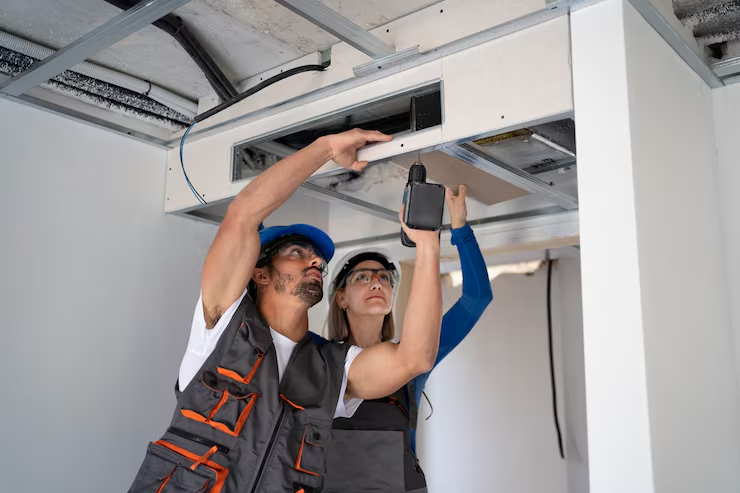
Let’s be real for a sec most people don’t give their AC a second thought until it stops working. It’s one of those things you just expect to “do its job” in the background. You set the thermostat, feel the cold air, and you’re good to go.
But when does it go out? Specially, in the middle of a hot summer? Yeah, suddenly everyone in the house is panicking.
This is why we talk so much about air conditioner maintenance at Smart HVAC Solutions. Most of the time, these major issues, the ones that cost hundreds or even thousands to fix, could’ve been prevented with a little bit of routine care. And I get it — “maintenance” doesn’t sound exciting. But ignoring it is how people end up sweating through July and wondering why their AC quit on them.
What does “regular maintenance” even mean?
Good question! Honestly, a lot of folks don’t really know what goes into it. Maintenance isn’t some massive overhaul or expensive rebuild. It’s usually pretty basic stuff.
We’re talking:
- Changing out or cleaning air filters
- Giving coils a proper cleaning (both inside and outside)
- Checking refrigerant levels
- Making sure the thermostat is calibrated right
- Cleaning out the condensate drain
- Inspecting electrical bits — wires, contacts, etc.
- Looking for signs of wear before they become a real problem
Sometimes we’ll spot a loose wire. Other times, the coil is covered in gunk, or the airflow’s off because a vent is clogged. A lot of it sounds small — until it isn’t.
How often should you really have your AC serviced?
People ask this all the time: Simple answer? Once a year. Ideally before summer hits and you’re relying on that thing to run day and night.
Now, depending where you live — say, somewhere like Phoenix, Texas, Florida, places where your AC basically works 9–10 months a year — you might even consider twice a year. Once in spring, once in fall. Not mandatory, but it can help catch things early.
Also, if you’ve got pets or live in a dusty area, you will want to check your filters every month or two. You’d be shocked how fast they clog up.
What happens if you skip AC maintenance?
Well… nothing at first. That’s the tricky part.
You skip maintenance one year, and maybe your AC still runs fine. But what you don’t see is the slow build-up: dirt in the coils, refrigerant running low, electrical bits getting stressed. Then, one day — bam — it’s 92 degrees, and the unit just stops. Or maybe it keeps running but your house never cools down.
Some common breakdowns we see that could’ve been prevented:
- Blown capacitors
- Frozen coils
- Overheating compressors
- Short cycling (AC turning on/off constantly)
- Burnt out motors
Most of these come with price tags that hurt.
Is it really that expensive to fix a broken AC?
Yup. And it always seems to happen at the worst possible time — usually during a heatwave when HVAC companies are booked out for days.
Basic repairs like replacing a capacitor or fixing a refrigerant leak might cost $150–$500. But if your compressor goes? You’re looking at $1,200 to $2,500. And a full system replacement? Easy $5k+, depending on your setup.
Maintenance, by comparison, usually costs way less. A couple hundred bucks a year, tops. And it keeps you out of those worst-case scenarios.
Can you do any of the maintenance yourself?
Absolutely — some of it, anyway.
Here’s what you can do without calling in help:
- Change your air filters,every 1–2 months if you’re handy
- Keep the outside unit clear of debris — leaves, grass, all that stuff
- Rinse the outdoor coils gently with a hose (carefully — no pressure washers)
- Pour a little vinegar into the drain line every few months to prevent clogs
- Check if the thermostat batteries need replacing
But the deeper stuff? That’s where pros like us at Smart HVAC Solutions come in. We’ve got the tools, gauges, and experience to spot the early warning signs before they become actual breakdowns.
Does maintenance really save money?
Yes. And not just on repairs.
Here’s how air conditioner maintenance helps your wallet:
- Lower energy bills – a clean, tuned system uses less electricity. Period.
- Fewer repairs – minor issues get fixed before they turn major.
- Longer system life – a well-maintained AC can last 15+ years. Neglected ones usually don’t.
- Keeps warranties valid – a lot of manufacturers require proof of annual maintenance to honor a warranty.
A lot of people don’t realize they voided their 10-year warranty just because they never had a system checked after it was installed. That stings.
How do you know if your AC is struggling?
It’s not always obvious. But if you pay attention, your system will start giving you hints.
Watch for:
- AC running constantly but not cooling much
- Strange smells (burning, musty, etc.)
- Odd sounds — buzzing, clanking, or clicking
- Weak airflow
- Water leaking near the unit
- Sudden spike in energy bills
Any of those? Time to get it looked at. You can wait, sure, but you’re probably just giving the problem time to get worse.
Do new systems still need maintenance?
Yep. Doesn’t matter if your unit was installed last year — it still needs routine checks. Think of it like a brand-new car. You don’t wait five years for the first oil change.
Plus, again, most AC warranties require proof of annual maintenance. So skipping it just because the system is “new” is asking for trouble.
Final thoughts: Is it really worth it?
We’ve been doing this a long time at Smart HVAC Solutions, and here’s what we know for sure: regular air conditioner maintenance always costs less than a breakdown. Always.
We’ve seen people spend $150 on a tune-up and avoid a $1,700 repair six months later. We’ve also seen folks skip maintenance for years and end up replacing their whole system way earlier than they should’ve.
So yeah, it’s worth it. It’s peace of mind. It’s comfortable. And it’s way cheaper than trying to survive July without AC.
Want help with your AC?
Not sure when your last service was? Or just want someone to give your system a once-over before it hits 95 outside? Smart HVAC Solutions has you covered.
Visit us or Shoot us a message, and we’ll help make sure your AC is running smooth — before it gives you a reason to panic.
